About me
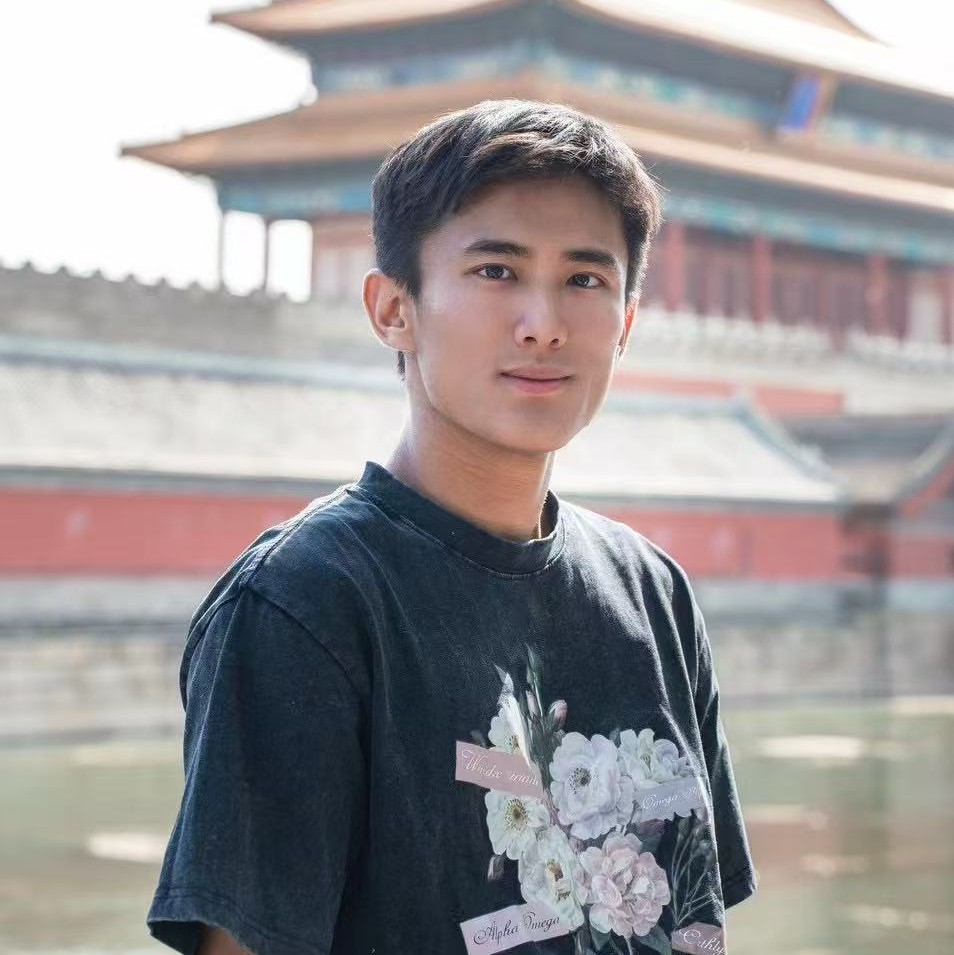
Welcome to my personal website! I am a Ph.D. student at the Guanghua School of Management, Peking University. My superviser is Professer Yijie Peng. I focus on BP-free training paradigms, reinforcement learning, and optimization. My work explores novel learning frameworks that move beyond backpropagation, aiming for more efficient and scalable AI training methods.
I hold dual bachelor’s degrees in Mechanical Engineering and Artificial Intelligence from Harbin Institute of Technology in 2023. With a strong engineering background, I am passionate about combining theoretical analysis with practical engineering to develop new learning paradigms and optimize AI-driven decision-making for real-world applications. Feel free to contact me at rtkenny@stu.pku.edu.cn.
Education
Peking University
Ph.D. in Operations Research, Guanghua School of Management / Institute for Artificial Intelligence
2023.09 - Present
Advisor: Professor Yijie Peng
Harbin Institute of Technology
Dual Bachelor’s Degrees in Mechanical Engineering and Artificial Intelligence
2019.09 - 2023.06
Internship Experience
Ubiquant iQuest, Post-Training Team
Agentic RL Intern
2026.06 - Present
Scaling agentic RL systems, including auto-research, search, and code agents.
Tongyi Lab, Qwen-Character Team
Self-Evolving Agent Intern
2025.12 - 2026.05
Worked on test-time training methods that internalize agent memory into model parameters.
Tsinghua AIR / Guangxiang Technology Joint Lab
Embodied Intelligence VLA Research Intern
2025.03 - 2025.11
Worked on training diffusion-based VLA with Gaussian Splatting and egocentric data.
Publications
Half-order Fine-Tuning for Diffusion Model: A Recursive Likelihood Ratio Optimizer
We propose the Recursive Likelihood Ratio (RLR) optimizer, a Half-Order fine-tuning paradigm for diffusion models that yields an unbiased, low-variance gradient estimator and significantly improves alignment efficiency for downstream tasks.
Tao Ren, Zishi Zhang, Zehao Li, Jingyang Jiang, Shentao Qin, Guanghao Li, Yan Li, Yi Zheng, Xinping Li, Min Zhan, Yijie Peng.
ICLR 2026 Oral paper link 🔗
OVLR: Efficient and Robust Training via Output-Level Variance-Reduced Likelihood Ratio
We propose the Output-Level Variance-Reduced Likelihood Ratio (OVLR) framework, which injects structured symmetric noise to reduce gradient variance and directly optimize non-differentiable objectives such as 0-1 loss and truncated loss.
Zishi Zhang, Tao Ren, Jingyang Jiang, Guanghao Li, Yijie Peng.
ICML 2026 paper link 🔗
RiskPO: Risk-based Policy Optimization via Verifiable Reward for LLM Post-Training
We propose RiskPO, a risk-based policy optimization framework for LLM post-training that replaces mean-based objectives with principled risk measures, alleviating entropy collapse and significantly improving reasoning performance.
Tao Ren, Jinyang Jiang, Hui Yang, Wan Tian, Minhao Zou, Guanghao Li, Zishi Zhang, Qinghao Wang, Shentao Qin, Yanjun Zhao, Rui Tao, Hui Shao, Yijie Peng.
ICLR 2026 paper link 🔗
FLOPS: Forward Learning with OPtimal Sampling
We introduce FLOPS, a forward learning algorithm with optimal sampling strategies to enhance training efficiency in simulation-based models.
Tao Ren, Zishi Zhang, Jinyang Jiang, Guanghao Li, Zeliang Zhang, Mingqian Feng, Yijie Peng.
ICLR 2025 paper link 🔗
Riskminer: Discovering Formulaic Alphas via Risk Seeking Monte Carlo Tree Search
We propose Riskminer, an alpha-mining framework that formulates formulaic alpha discovery as a reward-dense MDP and solves it via risk-seeking Monte Carlo Tree Search, jointly improving exploration and the synergistic performance of alpha collections.
Tao Ren, Ruihan Zhou, Jinyang Jiang, Jiafeng Liang, Qinghao Wang, Yijie Peng.
ICAIF 2024 paper link 🔗
SCOUT: Teaching Pre-trained Language Models to Enhance Reasoning via Flow Chain-of-Thought
We propose SCOUT, a lightweight Flow Chain-of-Thought fine-tuning framework that enables progressively deeper iterative reasoning in pre-trained language models without costly pretraining or manual CoT supervision.
Guanghao Li, Wenhao Jiang, Mingfeng Chen, Yan Li, Hao Yu, Shuting Dong, Tao Ren, Ming Tang, Chun Yuan.
NeurIPS 2025 paper link 🔗